Partridge Well Drilling constructs several types of water wells throughout Northeast Florida. The type of well best suited for a property depends on the location, geology, intended use, water requirements.
The four primary types of wells we drill are Floridan Aquifer (Artesian), Intermediate, Rock, and Screen/Gravel Pack wells.
Of these, Floridan Aquifer wells are available throughout most of North East Florida. Construction methods, casing sizes, casing depths, sealing requirements, and total well depths vary depending on location and application.
Floridan Aquifer(“Artesian”) Well
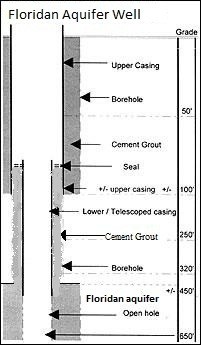
Floridan Aquifer wells, sometimes referred to as artesian wells, are typically constructed 3 inches or larger in diameter and cased from the land surface into the limestone formation. Well depths generally range from approximately 250 to 1,000 feet, depending on the location, geology, and intended use of the well.
These wells draw water from the Floridan Aquifer, one of Florida’s most important groundwater resources. In many areas, Floridan Aquifer wells can provide large and dependable quantities of water for residential, commercial, agricultural, and other applications.
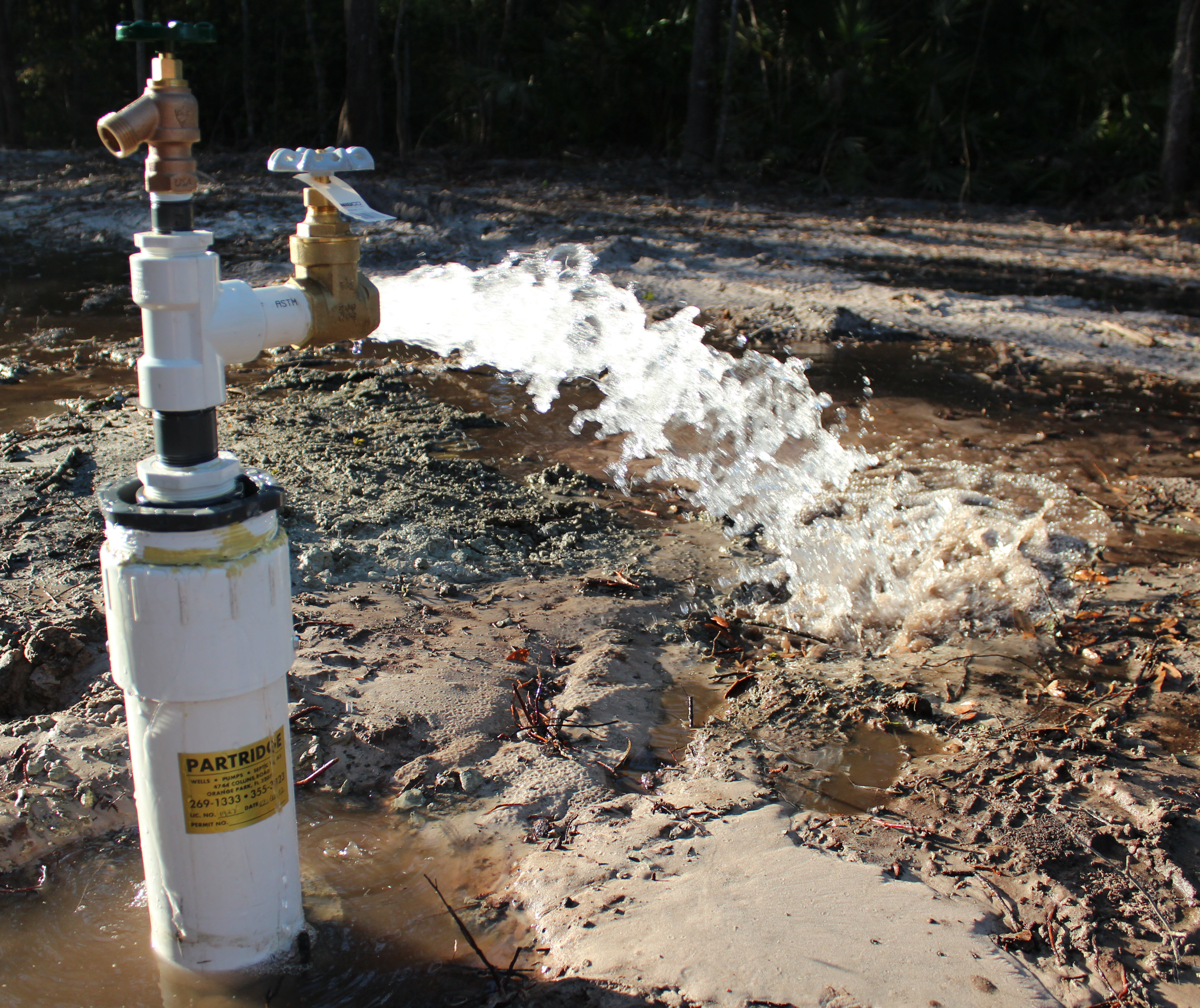
Water characteristics vary by location and may include naturally occurring sulfur or other minerals. Although commonly called artesian wells, not all Floridan Aquifer wells will naturally flow at the ground surface. Water levels are influenced by local ground elevation and aquifer pressure and can vary significantly from one property to another. Pumping requirements also vary depending on the water level and site conditions.
Intermediate (“Salt & Pepper”) Well
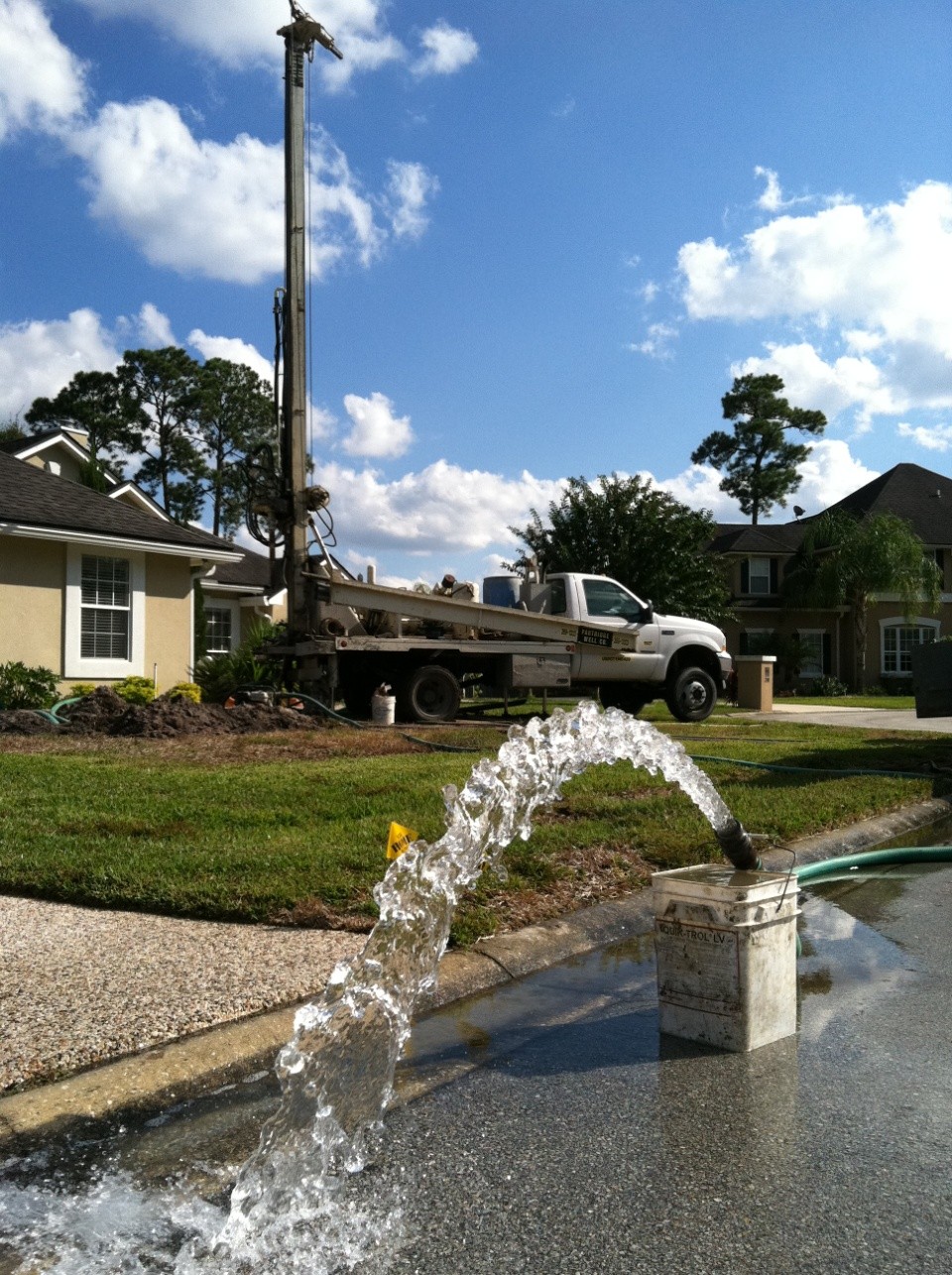
Also known as a “Salt & Pepper” (S&P) well, an intermediate well is typically constructed with 3-, or 4-inch casing and drilled to depths of approximately 200–320 feet.
S&P wells are not available in all areas, as water quality and underground formations vary by location. Depending on the area, the water may contain sulfur and, in some cases, sand. Where conditions are favorable, however, an S&P well can provide a dependable source of water for residential use, including drinking water.
Because water levels in these wells are often relatively deep, they typically require a submersible pump or a deep-well jet pump.
Rock Well
Rock wells are typically constructed with 3-, or 4-inch casing and generally range from approximately 80 to 200 feet deep, depending on local geology.
Water from rock wells may contain naturally occurring minerals, including iron, with water quality varying considerably by location. Because the water level is generally below the surface, a pump is required to deliver water from the well.
Where geological conditions are favorable, rock wells can provide a dependable water source for residential and irrigation applications. Many rock wells can be completed relatively quickly, although drilling time depends on site and subsurface conditions.
Screen Gravel Pack Well
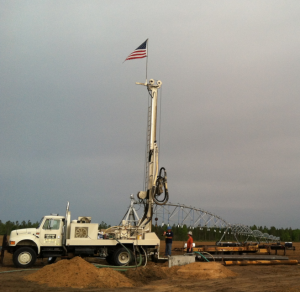
Screen or gravel-pack wells are typically constructed with 2-, 3-, or 4-inch casing and utilize a well screen positioned within a suitable water-bearing sand or shell formation.
These wells are commonly constructed in areas where suitable rock formations are absent or where a rock well cannot provide the necessary quantity of water. Typical depths range from approximately 60 to 150 feet, depending on local geology.
Screen wells require a pump to bring water to the surface and are commonly used for residential irrigation and other water-supply applications. Water quality and available capacity vary by location.
Not Sure Which Well Is Right for Your Property?
The right well depends heavily on where your property is located and how you intend to use the water. With experience drilling wells throughout Northeast Florida, Partridge Well Drilling can evaluate your property and recommend the appropriate well construction for your needs.
Call 904-269-1333 to speak with our team about your property or upcoming project.